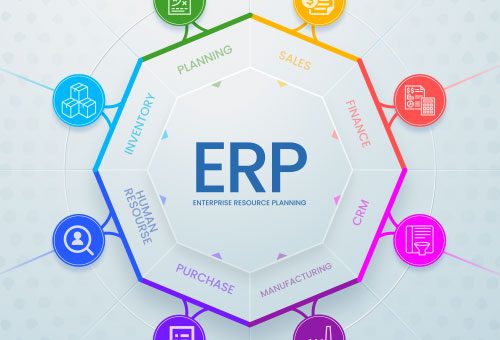
Enterprise Resource Planning (ERP) Implementation & Optimization

Enterprise Resource Planning (ERP) Implementation & Optimization

SJIIT
Strategic Foundation of Modern Enterprise Operations Enterprise Resource Planning (ERP) systems serve as the operational backbone of large and mid-sized organizations, unifying core business processes including finance, procurement, supply chain, manufacturing, sales, service, human capital management, project management and compliance into a single integrated platform. In 2026 successful ERP implementations and continuous optimization initiatives deliver measurable improvements in process efficiency, data accuracy, decision velocity, regulatory compliance and total cost of ownership. Organizations that master ERP deployment and ongoing refinement gain significant competitive advantages through standardized operations, real-time visibility, reduced manual work and enhanced cross-functional collaboration. Modern ERP Architecture & Deployment Models Contemporary ERP platforms are predominantly cloud-native or hybrid-cloud offerings (SaaS or PaaS) with microservices architecture, API-first design, composable business capabilities and embedded intelligence. Leading solutions include SAP S/4HANA Cloud,…

Read More
Artificial Intelligence & Machine Learning Solutions

Artificial Intelligence & Machine Learning Solutions

SJIIT
Enterprise-Grade AI & Machine Learning Transformation Artificial Intelligence and Machine Learning Solutions have become the defining competitive differentiator for forward-looking enterprises in 2026. Organizations deploy AI/ML across every business function to automate complex decisions, generate predictive intelligence, personalize experiences at scale, optimize operations in real time and unlock entirely new revenue models. Mature AI programs combine domain-specific models, robust MLOps pipelines, governed data foundations, ethical AI frameworks and continuous value tracking to deliver measurable ROI while managing risk, bias and regulatory exposure effectively. AI Strategy & Operating Model Design Successful enterprise AI adoption begins with a clear, board-aligned AI strategy that defines ambition level, priority domains, investment thesis, talent roadmap and governance structure. Leading organizations establish AI Centers of Excellence or AI Platform teams that operate as internal service providers,…
Read More
Knowledge Process Outsourcing – KPO

Knowledge Process Outsourcing – KPO

SJIIT
Strategic Knowledge Process Outsourcing Knowledge Process Outsourcing (KPO) represents the high-value evolution of traditional outsourcing, focusing on complex, judgment-intensive, research-driven and analytical processes that require specialized domain expertise, advanced education, critical thinking and decision-making capabilities. Unlike conventional BPO which handles rule-based transactional work, KPO delivers intellectual capital, strategic insights and high-impact outcomes across finance, legal, healthcare, market research, engineering, data analytics, IP management and management consulting functions. In 2026 leading organizations deploy KPO as a strategic capability to access global talent pools, accelerate innovation cycles, reduce fixed costs and enhance decision quality without building large captive centers. Financial Research & Investment Analytics KPO Financial KPO services include equity research, fixed income analysis, credit risk modeling, portfolio performance attribution, valuation modeling (DCF, comparable, precedent transactions), pitch book preparation, investor presentation development…
Read More
Business Process Outsourcing – BPO

Business Process Outsourcing – BPO

SJIIT
Strategic Value of Business Process Outsourcing Business Process Outsourcing (BPO) enables enterprises to delegate non-core, repetitive or specialized business functions to expert third-party providers, allowing internal teams to focus on strategic priorities, innovation and customer-facing activities. In 2026 BPO has matured into a sophisticated, technology-enabled service model delivering cost reduction, operational scalability, process excellence, 24/7 coverage and access to global talent pools. Leading organizations leverage BPO not merely for cost arbitrage but as a strategic lever for transformation, quality improvement, risk mitigation and accelerated growth across multiple functional domains. Accounting BPO & Finance BPO Services Accounting BPO and Finance BPO deliver end-to-end financial operations including accounts payable, accounts receivable, general ledger management, financial close, reconciliation, fixed assets, tax compliance, financial reporting and FP&A support. Advanced providers combine RPA, AI-driven invoice…
Read More
Fashion Designing – Lingerie

Fashion Designing – Lingerie

SJIIT
The Art & Science of Lingerie Design Lingerie design combines fashion artistry, textile engineering, intimate anatomy knowledge, material science and consumer psychology into one of the most technically demanding and emotionally nuanced categories in apparel. In 2026 lingerie has evolved far beyond traditional undergarments into a powerful expression of identity, confidence, sensuality, comfort and inclusivity. Modern lingerie brands balance aesthetic innovation, body-positive sizing, sustainable materials, advanced fabrication techniques and performance functionality to meet the expectations of diverse global consumers who demand both beauty and intelligent engineering in their intimate apparel. Anatomy-Informed Pattern Making & Fit Engineering Precision in lingerie begins with deep understanding of female (and increasingly male/non-binary) torso anatomy across a wide range of body shapes, breast types, ribcage depths, waist-to-hip ratios and posture variations. Professional lingerie pattern makers…
Read More
Digital Transformation & Enterprise Strategy

Digital Transformation & Enterprise Strategy

SJIIT
The Strategic Imperative of Digital Transformation Digital Transformation represents the deliberate reinvention of business models, operating models, customer experiences and organizational capabilities through integrated application of digital technologies, data intelligence and cultural change. In 2026 leading enterprises treat digital transformation not as an IT project but as the central strategy for long-term relevance, resilience and value creation. Organizations that execute coherent, enterprise-wide digital strategies achieve sustained revenue growth, margin expansion, faster innovation cycles, superior customer loyalty and structural cost advantages over slower-moving competitors. From Digital Initiatives to Enterprise-Wide Strategy Mature digital transformation programs align technology investments with clearly articulated business outcomes rather than implementing point solutions. Executive leadership defines a multi-year digital ambition supported by measurable KPIs across revenue, cost, customer experience, operational efficiency, risk management and innovation velocity. Cross-functional…
Read More
Digital Marketing, SEO & Brand Strategy

Digital Marketing, SEO & Brand Strategy

SJIIT
Integrated Digital Marketing & Brand Leadership Digital Marketing, Search Engine Optimization (SEO) and Brand Strategy form the core growth engine for modern enterprises. In 2026, high-performing organizations orchestrate these disciplines into a unified, data-informed system that drives sustainable revenue, market share expansion, customer lifetime value and brand equity. Integrated strategies combine performance marketing, content excellence, technical SEO, brand storytelling, user experience optimization and advanced analytics to create compounding returns across owned, earned, paid and partner channels while building long-term differentiation in crowded digital markets. Modern Digital Marketing Ecosystem Contemporary digital marketing operates as a connected ecosystem rather than isolated channels. Enterprise-grade martech stacks integrate CRM, CDP, marketing automation, analytics, ad platforms, content management, personalization engines and attribution modeling into unified workflows. Leading organizations adopt zero-party and first-party data strategies, cookieless…
Read More
Education Technology & Digital Learning Solutions

Education Technology & Digital Learning Solutions

SJIIT
Transforming Education Through Technology Education Technology (EdTech) and Digital Learning Solutions have become foundational elements of modern education systems worldwide. In 2026, educational institutions, corporate training departments and lifelong learning platforms increasingly rely on digital infrastructure to deliver personalized, scalable and measurable learning experiences. These solutions combine adaptive learning platforms, interactive content, AI-driven personalization, virtual classrooms, learning analytics and immersive technologies to address diverse learner needs across K-12, higher education, vocational training and professional development. Organizations implementing robust EdTech strategies achieve higher engagement rates, improved learning outcomes, greater accessibility and significantly reduced delivery costs compared to traditional classroom-only models. Learning Management Systems & Digital Ecosystems Modern Learning Management Systems (LMS) serve as the central nervous system of digital education environments. Enterprise-grade platforms integrate course authoring tools, assessment engines, gradebooks, discussion…
Read More